
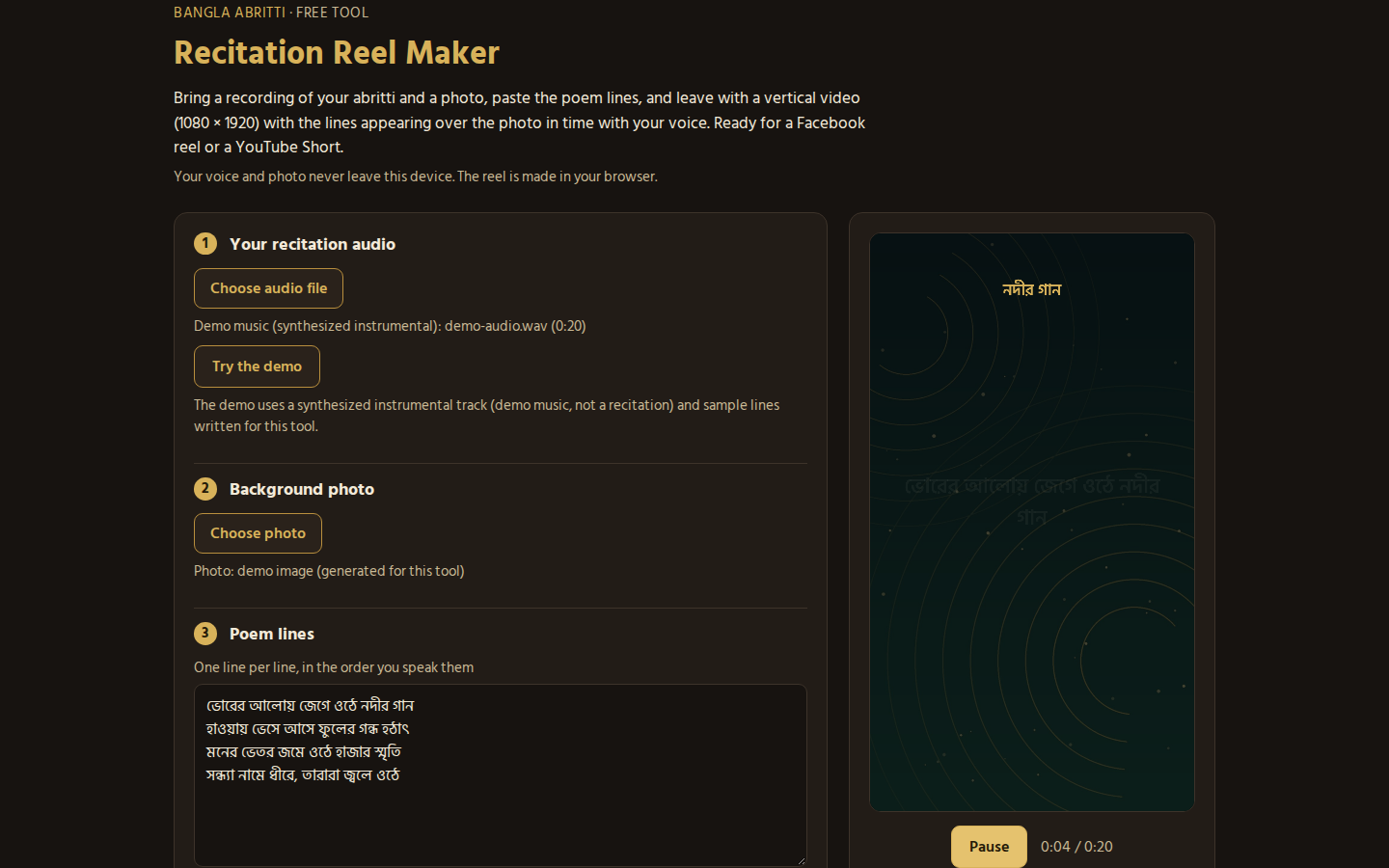
Press play on the demo and the first sample line is already fading in over the image, four seconds into a twenty second track. That preview in the Recitation Reel Maker is timed exactly the way the exported reel will be, which makes the tool useful long after the export button. Six ways we would use it:
1. One honest take, one Facebook reel
Most reciters already share audio into groups where it scrolls past unseen. The same take over a photo, with the words on screen, stops thumbs. Our Facebook sharing guide covers the posting side; the reel maker is the missing step before it.
2. A Shorts series from one long poem
Split a long poem into stanzas and make one reel per stanza. Same photo, same look, a series people can follow. Keep your pace steady inside each take: lines are spread evenly across the recording, so a long dramatic pause in the middle will push the later lines off your voice. YouTube accepts the WebM file as it comes out; the YouTube upload guide covers the rest.
One decision matters more than the rest: the photo. It sits under every line for the whole reel, so pick the image you would want as the poem's cover. A river at dusk for a Jibanananda piece, a family courtyard for a childhood poem. If the photo is busy, raise the dark overlay past the 55 percent default until the words sit clean; the overlay exists for exactly that fight between picture and text.
3. Festival pieces, finished before the festival
Eid, Puja and Pohela Boishakh all arrive with everyone posting at once. Pick the poem with our festival poem guide, record it on a quiet evening, and keep the finished reel ready to post on the day instead of scrambling.
4. Credits on the frame, not buried in a comment
The tool carries fields for poem title, poet and recited by, printed on the reel itself. Use them. A Tagore piece travelling without his name helps nobody; the classic abritti voices are remembered partly because their recordings always said whose words they were carrying.
5. A timing check before anyone else hears it
The preview is a rehearsal mirror. Play it back and watch where the lines drift from your voice; that is where your pace sped up or a pause ran long. Fix it in the next take, not in the edit. Our home practice guide works on exactly those three things: breath, pause and emphasis.
6. Music under the words, kept under
A quiet bed changes a recitation. The demo track is synthesized instrumental music, and your own recording can carry a soft bed the same way, as long as the words stay on top; our background music guide is blunt about where that line sits. On story nights, pair the reel with a poster from the Horror Story Poster Maker at ShunoGolpo, then make tonight's take into tonight's reel: open the Reel Maker.